Fire safety is not something businesses, institutions, residential complexes, or commercial properties can afford to overlook. A small electrical fault, blocked emergency exit, overloaded circuit, or poorly maintained fire extinguisher can quickly turn into a serious emergency. In a growing city like Bhubaneswar, where residential buildings, offices, hospitals, hotels, schools, warehouses, and commercial establishments continue to expand, maintaining effective fire protection systems is more important than ever.
Professional fire safety audits and inspections help property owners identify hidden hazards before they become dangerous. These assessments also help organizations understand whether their existing fire protection arrangements are properly installed, accessible, maintained, and suitable for the nature of the property.
If you are looking for reliable Fire Safety Audit & Inspection Services in Bhubaneswar, choosing an experienced professional can make the process more systematic and effective. A thorough audit does more than inspect fire extinguishers. It evaluates the overall fire safety preparedness of a property and highlights areas that may require corrective action.
What Is a Fire Safety Audit
A fire safety audit is a systematic assessment of a building, facility, or workplace to identify potential fire hazards and evaluate the effectiveness of existing fire prevention and protection measures. The objective is to reduce fire risks and improve the safety of occupants, assets, and operations.
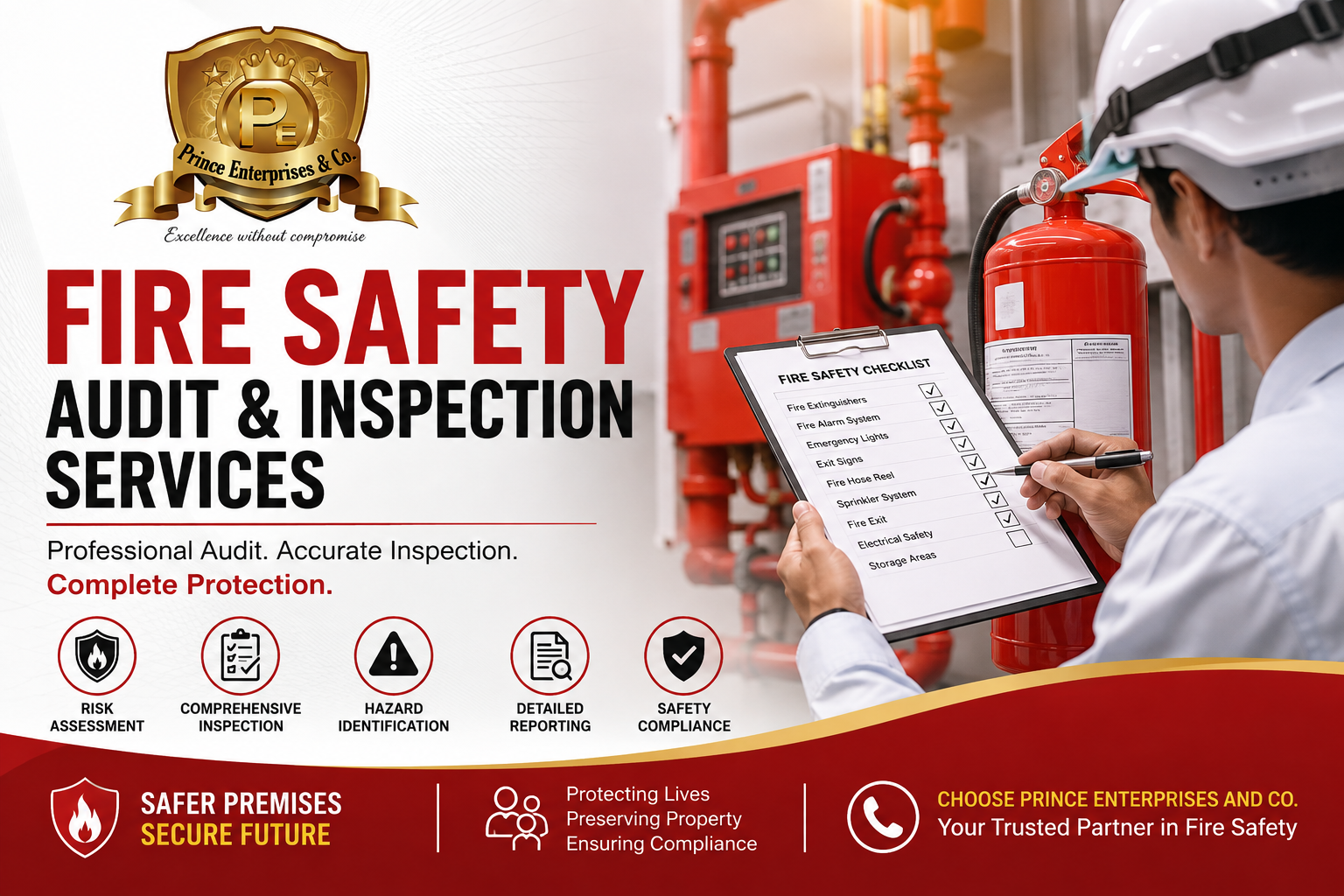
During an audit, professionals examine different aspects of fire safety, including emergency exits, fire extinguishers, hydrant systems, alarm systems, electrical installations, evacuation arrangements, signage, emergency lighting, and other relevant safety provisions.
Unlike a basic visual inspection, a comprehensive audit looks at how different fire safety measures work together. It can reveal problems that may not be immediately obvious to property owners or facility managers.
Why Fire Safety Audits Are Important in Bhubaneswar
Bhubaneswar has experienced considerable development across residential, commercial, industrial, educational, healthcare, and hospitality sectors. As buildings become larger and more complex, fire safety requirements also become increasingly important.
A well-planned fire safety audit can help identify risks associated with electrical equipment, combustible materials, storage practices, cooking areas, machinery, fire exits, and occupancy patterns.
The value of an audit is not limited to preventing property damage. Effective fire safety planning can help protect employees, customers, residents, visitors, and emergency response teams.
Regular inspections can also encourage better safety awareness among occupants. When people understand evacuation procedures and know where emergency equipment is located, they can respond more confidently during a fire-related incident.
What Does a Professional Fire Safety Inspection Cover
A professional inspection generally begins with an assessment of the building and its usage. The auditor considers factors such as occupancy, floor layout, building size, potential ignition sources, combustible materials, and existing fire protection infrastructure.
Fire extinguishers are checked for appropriate placement, accessibility, visible condition, and maintenance status. Fire alarm and detection systems may also be reviewed to determine whether they are appropriately installed and operational.
Emergency exits receive particular attention because an inaccessible or obstructed escape route can create serious problems during an emergency. Staircases, exit doors, corridors, emergency lighting, evacuation signage, and assembly arrangements may therefore form part of the assessment.
Depending on the type of property, the inspection can also cover hydrant systems, sprinkler installations, fire pumps, hose reels, smoke control arrangements, electrical safety measures, and other fire protection systems.
Identifying Hidden Fire Hazards
One of the biggest benefits of professional auditing is the ability to uncover risks that may otherwise go unnoticed.
For example, an extinguisher might be installed but positioned behind equipment, making it difficult to access quickly. An emergency exit could exist but remain blocked by stored materials. Electrical cables may appear functional while being improperly arranged or overloaded.
Similarly, fire doors may not close correctly, emergency lighting may not function during a power failure, or fire alarm components may require servicing.
A professional inspection brings these issues to the attention of management so appropriate corrective measures can be considered before an incident occurs.
Fire Safety Compliance and Documentation
Fire safety is not only about installing equipment. Proper documentation, inspection records, maintenance reports, testing schedules, evacuation procedures, and other relevant records can also play an important role in demonstrating ongoing safety management.
Property owners and facility managers should maintain organized records of fire equipment servicing and inspections. This creates a clearer picture of the property's safety history and helps identify recurring issues.
Professional consultants can also help organizations understand the documentation that may be required for their specific type of building and application.
Because requirements can vary depending on the building category, occupancy, location, construction, and applicable regulations, businesses should obtain advice based on their actual circumstances rather than relying on generic checklists.
The Role of a Fire Safety NOC Consultant
A Fire Safety NOC Consultant in Bhubaneswar can assist property owners and businesses with understanding the fire safety requirements associated with obtaining or maintaining the applicable fire-related approvals.
The consultant's role may involve reviewing building plans, assessing existing fire protection systems, identifying compliance gaps, coordinating documentation, and guiding clients through relevant procedures.
Professional guidance can be particularly useful for new construction projects, commercial properties, industrial facilities, hospitals, hotels, educational institutions, and other buildings where fire safety requirements can be extensive.
A consultant can also help identify deficiencies before an inspection, allowing the property owner to address potential issues in advance.
Fire Safety Audit for Commercial Buildings
Commercial buildings often have multiple occupants, electrical equipment, storage areas, server rooms, kitchens, machinery, and other potential fire hazards. A fire safety audit helps management understand whether the existing safety arrangements are suitable for the building's actual usage.
Office buildings should pay attention to electrical installations, server and equipment areas, emergency exits, evacuation procedures, alarm systems, and extinguisher placement.
Shopping complexes and retail properties may require additional attention because of high visitor volumes and the presence of different businesses within one building.
Restaurants and hotels can have specific risks associated with cooking equipment, LPG or other fuel sources, electrical appliances, storage areas, and large numbers of occupants.
Fire Safety Audit for Residential Buildings
Fire safety is equally important in residential apartments, housing societies, and high-rise buildings. Residents may assume that a building's fire protection systems will always function when needed, but equipment requires regular inspection and maintenance.
A residential fire safety assessment can examine fire extinguishers, hydrant systems, pumps, fire alarms, emergency exits, staircases, signage, emergency lighting, and access routes for firefighting personnel.
Special attention should be given to common areas because blocked corridors, parking spaces, storage rooms, and electrical areas can contribute to fire risk.
Residents and building management should also understand basic evacuation procedures. A well-maintained fire safety system becomes considerably more effective when occupants know how to respond during an emergency.
Fire Safety for Schools and Educational Institutions
Schools, colleges, training centers, and educational institutions have a special responsibility because they accommodate children, students, teachers, staff, and visitors.
A fire safety audit can evaluate evacuation routes, emergency exits, fire extinguishers, alarms, assembly areas, electrical installations, laboratories, kitchens, storage spaces, and other areas that may present fire risks.
Regular fire drills can complement technical inspections by helping students and staff understand what to do during an emergency.
Clear signage and accessible escape routes are particularly important in educational facilities because confusion during an emergency can delay evacuation.
Fire Safety for Hospitals and Healthcare Facilities
Hospitals and healthcare facilities require careful fire safety planning because many occupants may have limited mobility or require assistance during evacuation.
A fire safety assessment can consider patient areas, electrical equipment, oxygen-related risks, kitchens, laboratories, storage areas, emergency exits, alarms, fire extinguishing systems, and evacuation procedures.
Healthcare facilities also benefit from clear emergency response plans that identify responsibilities for staff members. Fire safety should be integrated into broader emergency management rather than treated as an isolated activity.
Fire Safety in Industrial and Warehouse Facilities
Industrial facilities and warehouses can present significant fire risks due to machinery, electrical systems, chemicals, combustible materials, packaging, fuels, and high-density storage.
The audit should consider the nature of materials stored or processed, possible ignition sources, storage arrangements, access for emergency response, fire detection systems, extinguishing systems, and emergency procedures.
Good housekeeping is particularly important in warehouses and industrial environments. Accumulated waste, improperly stored materials, blocked access routes, and damaged electrical equipment can increase the likelihood or severity of a fire.
Professional inspection can help management prioritize corrective measures according to the property's specific risks.
How Fire Safety Audits Help Prevent Major Losses
A fire safety audit cannot guarantee that a fire will never occur. However, it can significantly improve preparedness by identifying weaknesses in prevention, detection, containment, evacuation, and firefighting arrangements.
Early identification of hazards gives property owners an opportunity to address issues before they contribute to an emergency.
For businesses, better fire preparedness can also support operational continuity. A major fire can result in equipment damage, business interruption, data loss, inventory destruction, and reputational harm.
Investing in preventive safety measures is therefore not simply a compliance exercise. It is part of responsible property and business risk management.
Why Choose Professional Fire Safety Audit Services
Attempting to assess a complex building without appropriate technical knowledge can result in important issues being overlooked. Professional auditors bring structured inspection methods and practical experience to the assessment process.
A qualified professional can look beyond the visible condition of equipment and evaluate whether the overall fire protection arrangement is appropriate for the property.
The audit report can provide management with a clearer understanding of existing deficiencies and areas that need attention. This makes it easier to plan improvements and prioritize safety-related investments.
What to Expect During a Fire Safety Audit
The process usually starts with understanding the building, its occupancy, activities, floor plan, and existing fire protection arrangements.
The auditor then conducts a physical inspection of relevant areas and systems. Depending on the property, this may include fire extinguishers, hydrants, pumps, alarms, emergency exits, electrical installations, signage, emergency lighting, storage areas, and other safety provisions.
Potential deficiencies are documented and discussed with the responsible team. Recommendations can then be prepared based on the observed risks and applicable requirements.
The final outcome should give the property owner or facility manager a practical understanding of what is working, what needs improvement, and what actions should receive priority.
How Often Should a Fire Safety Audit Be Conducted
The ideal frequency depends on the type of property, occupancy, fire risk, applicable requirements, changes to the building, and the condition of its safety systems.
Properties with higher fire risks or frequent changes in occupancy and operations may benefit from more frequent assessments. Additional inspections may also be appropriate after major renovations, changes in building use, installation of new equipment, or significant modifications to fire protection systems.
Regular equipment maintenance should continue between comprehensive audits. A fire extinguisher, alarm, pump, or sprinkler system should not be ignored simply because a previous audit was completed.
Common Fire Safety Mistakes to Avoid
One common mistake is assuming that installing fire extinguishers alone makes a property fire-safe. Extinguishers are only one part of a complete fire protection strategy.
Another problem is allowing emergency exits, corridors, staircases, or access routes to become storage areas. During a fire, even a small obstruction can create unnecessary delays.
Ignoring electrical hazards is another major concern. Temporary wiring, overloaded sockets, damaged cables, and poorly maintained electrical equipment can increase fire risk.
Lack of employee or occupant awareness can also weaken emergency preparedness. People should know evacuation routes, emergency procedures, and the locations of essential safety equipment.
Choosing the Right Fire Safety Consultant in Bhubaneswar
When selecting a fire safety consultant, property owners should consider relevant experience, technical capability, understanding of applicable requirements, documentation practices, and the ability to provide practical recommendations.
A good consultant should focus on the actual risks of the property rather than offering a generic checklist.
Communication is equally important. The auditor should be able to explain identified deficiencies clearly and help management understand why particular corrective actions matter.
For businesses seeking long-term fire safety support, it can be useful to work with a professional who can assist with audits, inspections, documentation, compliance guidance, and ongoing safety improvement.
Benefits of Regular Fire Safety Inspection
Regular inspections create a proactive approach to fire risk management. Instead of waiting for equipment failure or an emergency, property owners can identify potential weaknesses earlier.
Inspections can help maintain the condition and accessibility of fire protection equipment, encourage better housekeeping, improve emergency preparedness, and support compliance management.
They can also help organizations establish a culture where fire safety becomes part of everyday facility management rather than an activity performed only when an inspection is expected.
Fire Safety Is an Ongoing Responsibility
Fire protection should never be viewed as a one-time project. Buildings change, businesses expand, equipment is replaced, layouts are modified, and occupants come and go.
These changes can introduce new risks or make existing safety arrangements less effective.
For this reason, fire safety audits should form part of an ongoing safety management program. Regular inspection, maintenance, employee awareness, emergency drills, documentation, and corrective action all contribute to better preparedness.
Conclusion
Professional fire safety assessment is an essential part of protecting people, property, and business operations. From offices and apartments to hospitals, schools, hotels, warehouses, and industrial facilities, every building has its own fire risks that deserve careful attention.
Choosing experienced Fire Safety Audit & Inspection Services in Bhubaneswar can help property owners identify hazards, evaluate existing protection systems, improve emergency preparedness, and address potential compliance gaps.
A comprehensive audit is not simply about checking whether fire equipment exists. It is about understanding whether the entire safety arrangement is accessible, functional, appropriate, and ready to support occupants during an emergency.
For organizations dealing with fire-related approvals and compliance requirements, professional consultation can also simplify the process and provide greater clarity. Most importantly, regular fire safety assessment creates a proactive approach that can help reduce preventable risks and build a safer environment for everyone.
FAQs
What is a fire safety audit?
A fire safety audit is a structured assessment of a property to identify fire hazards and evaluate its fire prevention, detection, protection, and evacuation arrangements. It helps property owners understand safety deficiencies and take appropriate corrective measures.
Why should businesses conduct fire safety audits?
Businesses should conduct fire safety audits to identify potential hazards, improve emergency preparedness, protect employees and visitors, maintain fire protection systems, and understand applicable safety requirements.
Who needs fire safety inspection services in Bhubaneswar?
Commercial buildings, residential complexes, offices, hospitals, hotels, schools, colleges, warehouses, industrial facilities, restaurants, and other occupied properties can benefit from professional fire safety inspections.
What systems are checked during a fire safety inspection?
Depending on the building, an inspection may cover fire extinguishers, hydrants, pumps, sprinklers, fire alarms, emergency lighting, exit routes, fire doors, safety signage, electrical installations, evacuation arrangements, and other relevant systems.
Can a fire safety audit help with fire NOC requirements?
Yes, professional fire safety consultation can help property owners understand applicable requirements, identify deficiencies, organize documentation, and prepare for relevant fire safety approval processes. Specific requirements depend on the building and applicable local regulations.
How often should fire safety inspections be performed?
The appropriate frequency depends on the building's risk profile, occupancy, usage, applicable regulations, equipment condition, and operational changes. Higher-risk facilities may require more frequent assessments and maintenance.
What happens if fire exits are blocked?
Blocked fire exits can delay evacuation and increase danger during an emergency. Exit routes should remain accessible and clearly identified so occupants can leave the building safely.
Is a fire extinguisher enough to protect a building?
No. Fire extinguishers are only one component of a comprehensive fire protection system. Effective safety also involves detection, alarms, evacuation routes, emergency lighting, fire protection infrastructure, maintenance, training, and proper emergency procedures.
Why hire a professional fire safety consultant?
A professional consultant can provide a structured assessment of the property's fire risks and identify issues that may be overlooked during a basic internal inspection. Professional guidance can also help with documentation, compliance planning, and corrective measures.
How can fire safety audits protect a business?
Fire safety audits can help identify hazards before they contribute to a serious incident. Better preparedness may reduce potential damage to people, property, equipment, inventory, and business operations while supporting a stronger overall safety culture.
What should property owners do after receiving an audit report?
Property owners should review the identified deficiencies, prioritize risks, implement appropriate corrective measures, maintain necessary documentation, and schedule follow-up inspections where appropriate. An audit is most valuable when its recommendations lead to practical improvements.
Is fire safety only the responsibility of building management?
No. Building management has important responsibilities, but occupants, employees, security teams, facility managers, and other relevant personnel also play a role in maintaining a safe environment. Awareness and cooperation are essential during emergencies.