Fire safety is one of the most important considerations for residential, commercial, industrial, and institutional properties. A well-designed sprinkler system can detect and control a fire at an early stage, helping reduce property damage and improve occupant safety. However, installing sprinklers is not simply about placing pipes and sprinkler heads throughout a building. The system must be properly designed, selected, installed, tested, and maintained according to the building’s requirements.
Choosing the right Fire Sprinkler System Installation in Bhubaneswar can make a significant difference when it comes to protecting people, assets, equipment, and infrastructure. From selecting the appropriate sprinkler type to ensuring adequate water pressure and coverage, every part of the installation requires careful planning and professional expertise.
Why Fire Sprinkler Systems Are Important
A fire can spread rapidly when combustible materials, electrical equipment, furniture, packaging, or other flammable items are present. Fire sprinklers provide an automatic response that can help control a developing fire before it becomes difficult to manage.
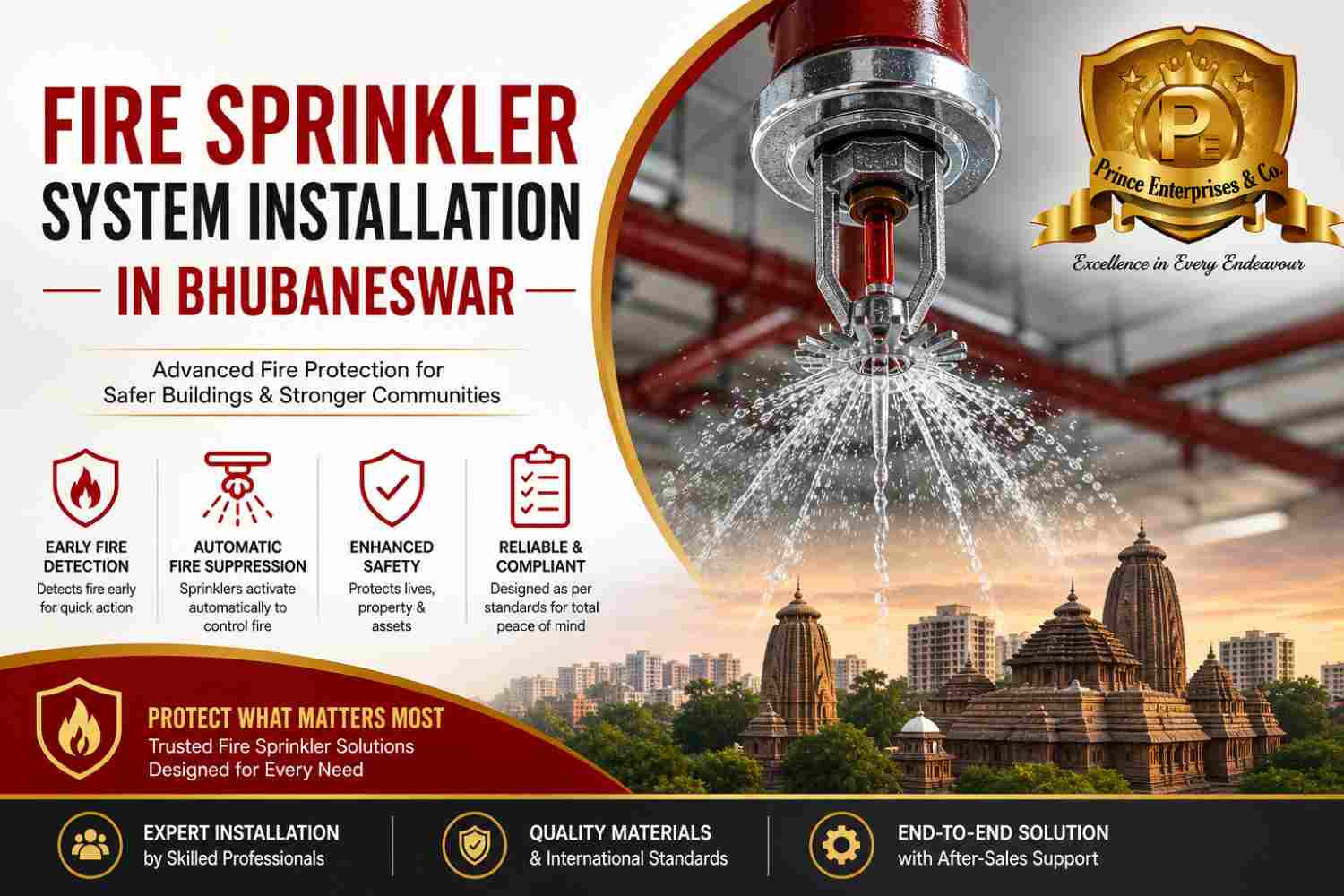
Unlike manual firefighting equipment, automatic sprinklers do not depend entirely on someone being present to identify the fire and take action. When heat reaches the operating temperature of an individual sprinkler head, that sprinkler can activate and release water over the affected area.
This early response can help limit the growth of a fire, reduce smoke and heat exposure, and provide valuable time for occupants to evacuate and for emergency responders to arrive.
Understanding Fire Sprinkler System Installation in Bhubaneswar
A sprinkler installation involves much more than fitting sprinkler heads to a ceiling. It generally includes system design, hydraulic calculations, pipe network planning, water supply assessment, valves, pumps where required, sprinkler heads, alarm interfaces, testing arrangements, and other supporting components.
The system should be designed according to the nature and occupancy of the building. A residential apartment, warehouse, hotel, hospital, shopping complex, office building, and manufacturing facility may have very different fire protection requirements.
Local environmental conditions and the building's construction should also be considered. Bhubaneswar has experienced rapid urban and commercial development, making appropriate fire protection planning increasingly important for new and existing properties.
Assess Your Building Before Installation
The first step toward an effective sprinkler system is understanding the building. A professional assessment should consider the building's size, layout, number of floors, occupancy, ceiling height, construction materials, storage arrangements, and potential fire hazards.
For example, a warehouse storing combustible materials may require a different sprinkler arrangement from an office containing computers and furniture. Similarly, kitchens, electrical rooms, server rooms, parking areas, and industrial spaces can present different types of fire risks.
A detailed site assessment allows professionals to determine where sprinklers are needed and what type of protection is appropriate for each area.
Select the Appropriate Sprinkler System
There is no single sprinkler configuration suitable for every property. Different sprinkler heads and system designs are available for different applications.
Wet pipe systems are widely used where temperatures remain above freezing because the pipes remain filled with water. When a sprinkler activates, water can be discharged almost immediately.
Dry pipe systems may be considered for areas where freezing conditions could affect water-filled pipes. Pre-action systems are commonly associated with applications where accidental water discharge needs to be carefully controlled. Other specialized arrangements may also be appropriate depending on the building and fire risk.
The correct choice should be based on professional assessment rather than simply selecting the most common or least expensive option.
Consider Water Supply and Pressure
Water availability is one of the most important aspects of sprinkler system performance. Even a high-quality sprinkler network may not provide effective protection if the water supply is inadequate.
Before installation, professionals should evaluate the available water source, tank capacity, pressure, flow requirements, pump arrangements, and other relevant factors. Hydraulic calculations can help determine whether the proposed pipe network and water supply can provide the required performance.
Where additional pressure is necessary, a properly selected fire pump and associated equipment may be required. The complete system should work as an integrated fire protection solution rather than as a collection of separate components.
Focus on Proper Sprinkler Coverage
Correct sprinkler placement is essential for effective fire protection. Sprinklers need to be positioned according to the characteristics of the protected area, ceiling configuration, obstructions, hazard classification, and system design.
Poor positioning can create areas where water coverage is inadequate. Ceiling beams, ducts, lighting fixtures, storage racks, partitions, and other obstructions can affect sprinkler discharge patterns.
Professional designers consider these factors when preparing the layout. The objective is not simply to install a large number of sprinkler heads but to achieve appropriate protection across the required areas.
Choose Quality Components
The performance of a fire sprinkler system depends on the quality and compatibility of its components. Pipes, fittings, sprinkler heads, valves, pumps, gauges, alarms, and other equipment should be suitable for their intended application.
Using low-quality or unsuitable components to reduce installation costs can create problems later. Corrosion, leakage, pressure loss, premature failure, and maintenance difficulties can affect system reliability.
Property owners should therefore consider quality, certification, compatibility, durability, warranty, and service support when selecting equipment.
Work With Experienced Fire Fighting & Sprinkler Contractors Bhubaneswar
Professional installation is one of the most important factors in achieving reliable fire protection. Experienced Fire Fighting & Sprinkler Contractors Bhubaneswar can evaluate the property, develop an appropriate system design, install the required equipment, and conduct testing before commissioning.
A qualified contractor should understand fire protection principles, relevant standards, installation practices, hydraulic requirements, and local building considerations. The contractor should also be capable of providing documentation and explaining the operation and maintenance requirements of the system.
Before hiring a contractor, property owners should evaluate their experience, technical capabilities, previous projects, product quality, service support, and ability to provide complete installation rather than only individual components.
Follow Applicable Fire Safety Standards
Fire sprinkler systems should be designed and installed in accordance with applicable fire safety requirements and relevant standards. Depending on the project, requirements may involve national standards, local fire authority requirements, building regulations, and project-specific specifications.
Compliance is important for both safety and regulatory reasons. A system that looks professionally installed may still be unsuitable if it does not meet the requirements applicable to the building.
Professional contractors can help property owners understand which standards and approvals apply to their project. However, owners should also verify the applicable requirements with the relevant authorities and qualified fire safety professionals.
Installation Quality Matters
Even the best system design can perform poorly if installation work is not completed correctly. Pipe joints, supports, valves, sprinkler heads, pressure gauges, drains, pumps, and other components need to be installed according to the approved design and applicable requirements.
Pipework should be adequately supported, protected against damage, and arranged to maintain appropriate water flow. Sprinkler heads should be installed in their intended orientation and location.
Installation teams should also ensure that valves remain accessible and that system controls can be inspected and operated when required.
Testing and Commissioning the System
Testing should be an essential part of every sprinkler installation. Before a system is commissioned, its components and overall operation should be checked carefully.
Testing may include pressure testing, water flow testing, valve inspection, pump performance checks, alarm interface verification, and other procedures appropriate to the system.
Commissioning helps identify installation problems before the building relies on the system for emergency protection. Property owners should request appropriate documentation confirming that testing and commissioning have been completed.
Fire Sprinkler Systems Need Regular Maintenance
Installing a sprinkler system is only the beginning of fire protection. Regular inspection, testing, and maintenance are necessary to keep the system ready for use.
Over time, sprinkler heads can become obstructed, valves can be altered, pipes can develop corrosion, and equipment can experience mechanical or electrical problems. Building modifications can also affect sprinkler coverage.
Routine maintenance should therefore be scheduled according to the system requirements and applicable standards. Any damaged or defective components should be addressed promptly.
Avoid Choosing a Contractor Based Only on Price
Cost is naturally an important consideration for property owners, but the cheapest installation is not necessarily the safest or most economical option.
A low initial quotation may exclude important components, engineering work, testing, documentation, or after-sales support. Inadequate design or poor-quality equipment can also create additional repair and replacement costs later.
Instead of comparing contractors only by price, compare the scope of work, design approach, equipment quality, installation methodology, testing procedures, documentation, warranty, and maintenance support.
Benefits of Professional Sprinkler Installation
A professionally designed and installed sprinkler system can provide several important advantages. It can offer automatic fire suppression, reduce the potential spread of fire, support safer evacuation, protect valuable property, and potentially reduce the extent of fire-related losses.
It can also contribute to a property's overall fire safety strategy when combined with fire alarms, extinguishers, hydrants, emergency exits, fire pumps, and other appropriate protection measures.
The goal should be to create a coordinated fire protection system rather than relying on one piece of equipment.
Common Mistakes to Avoid
One common mistake is installing sprinklers without first conducting a detailed assessment of the building. Another is selecting equipment based solely on price rather than suitability and quality.
Ignoring water supply requirements is another serious issue. A sprinkler system needs an appropriate water source and pressure to perform as intended.
Property owners should also avoid treating maintenance as optional. A system that has not been inspected or tested for a long period may not perform as expected during an emergency.
Another mistake is making building modifications without reviewing their impact on the existing sprinkler layout. Renovations, new partitions, storage changes, and ceiling modifications can affect sprinkler coverage.
How to Choose the Right Installation Company
Choosing the right installation company requires some research. Start by looking for contractors with relevant experience in buildings similar to yours. Ask about previous projects and the types of fire protection systems they have designed and installed.
It is also useful to understand whether the contractor provides complete services, including assessment, design, installation, testing, commissioning, and maintenance.
Ask for a clear quotation that explains what is included. The proposal should provide enough information to compare different contractors fairly without relying on price alone.
Communication is another important factor. A good contractor should be willing to explain the system design, answer technical questions, discuss maintenance requirements, and provide appropriate project documentation.
Fire Sprinkler Installation for Different Buildings
Different properties require different approaches to sprinkler protection. Residential buildings may require protection for apartments, common areas, parking spaces, and other relevant locations.
Commercial buildings may include offices, retail spaces, restaurants, storage areas, and electrical rooms. Each area can have different fire hazards.
Industrial properties and warehouses can present additional challenges because of high storage levels, combustible materials, machinery, chemicals, and large open spaces.
Hotels, hospitals, schools, and other institutional buildings also require careful planning because occupant safety and evacuation considerations can be particularly important.
A professional fire protection assessment can help determine the appropriate approach for each property type.
Integrating Sprinklers With Other Fire Protection Systems
Sprinklers should not be considered a replacement for other fire safety measures. A comprehensive fire protection strategy may include automatic fire detection, fire alarms, emergency lighting, extinguishers, hydrants, fire pumps, fire doors, smoke control systems, and clearly marked escape routes.
When these systems are properly planned together, they can provide multiple layers of protection.
For example, an alarm system can alert occupants to a fire while the sprinkler system works to control the fire. Fire extinguishers can provide an additional option for trained personnel where appropriate, while emergency exits support evacuation.
Why Local Expertise Can Be Valuable in Bhubaneswar
Working with a contractor familiar with Bhubaneswar can make project coordination easier. Local professionals may have experience with regional building practices, common property types, local project conditions, and applicable approval processes.
They may also be better positioned to provide responsive inspection, maintenance, and emergency support after installation.
However, local presence should not be the only selection criterion. Technical expertise, professional credentials, quality of work, safety practices, and service capabilities should remain central to the decision.
Cost Considerations for Fire Sprinkler Installation
The cost of a sprinkler installation depends on several factors. Building size, number of floors, system type, hazard classification, pipe length, sprinkler count, water storage, pump requirements, ceiling height, accessibility, and existing infrastructure can all influence the final cost.
Existing buildings may also require additional work because installation can involve modifications to ceilings, walls, electrical systems, or other infrastructure.
Instead of focusing on a fixed price per sprinkler head, property owners should consider the complete project cost and the level of protection being provided. A detailed site assessment is the best way to obtain a realistic project estimate.
The Long-Term Value of Fire Protection
Fire sprinkler installation should be viewed as an investment in safety rather than simply an additional building expense. A well-maintained system can provide protection for many years when properly designed, installed, inspected, and maintained.
The financial impact of a major fire can extend far beyond physical property damage. Business interruption, equipment replacement, inventory loss, operational delays, and reputational consequences can create significant additional costs.
Effective fire protection can therefore play an important role in reducing potential losses and supporting business continuity.
Conclusion
Choosing the right fire protection system is an important responsibility for every property owner, builder, facility manager, and business operator. A properly designed sprinkler system can provide an automatic first response to fire and help limit the potential spread of flames before the situation becomes more serious.
The key to effective protection is not simply installing sprinklers but selecting the right system, using quality components, ensuring adequate water supply, achieving appropriate coverage, following applicable safety requirements, and working with experienced professionals.
When considering Fire Sprinkler System Installation in Bhubaneswar, take the time to evaluate your property's specific risks and requirements. Choose a professional contractor that can provide reliable design, installation, testing, commissioning, and long-term maintenance.
A carefully planned sprinkler system is more than a building upgrade. It is an investment in life safety, property protection, business continuity, and long-term peace of mind.
FAQs
What is a fire sprinkler system?
A fire sprinkler system is an automatic fire protection system designed to discharge water when a sprinkler head reaches its operating temperature. It is intended to control or suppress a fire in the protected area and support overall building safety.
Is a sprinkler system necessary for every building?
The requirements depend on factors such as building type, occupancy, size, height, fire risk, applicable regulations, and local authority requirements. A professional assessment can determine what type of fire protection system is appropriate for a particular property.
How does a fire sprinkler activate?
Individual sprinkler heads generally activate when heat from a fire causes their heat-sensitive element to reach its operating temperature. Sprinklers are designed to respond to heat rather than simply activating because a smoke detector has detected smoke.
Does every sprinkler head activate at the same time?
No. In many conventional sprinkler systems, individual sprinkler heads activate when exposed to sufficient heat. This can help direct water toward the area where the fire is developing rather than discharging water from every sprinkler simultaneously.
How often should a sprinkler system be maintained?
Inspection and maintenance frequency depends on the system, equipment, building conditions, applicable standards, and authority requirements. Property owners should follow the maintenance schedule recommended by qualified professionals and relevant regulations.
Can an existing building have a sprinkler system installed?
Yes, sprinkler systems can often be installed in existing buildings. However, retrofitting may require detailed planning because the contractor needs to work around existing ceilings, walls, electrical systems, plumbing, occupancy arrangements, and structural conditions.
How long does sprinkler installation take?
The installation period varies according to the size and complexity of the property. A small project may be completed relatively quickly, while large commercial or industrial projects can require considerably more time for design, procurement, installation, testing, and commissioning.
What should I check before hiring a sprinkler contractor?
Consider the contractor's relevant experience, technical expertise, project portfolio, equipment quality, design capabilities, testing procedures, documentation, warranty, maintenance services, and understanding of applicable fire safety requirements.
Are fire sprinklers enough to protect a building?
Sprinklers are an important component of fire protection, but they should normally be part of a broader safety strategy. Depending on the building, other measures such as fire alarms, extinguishers, hydrants, emergency exits, fire doors, emergency lighting, and fire pumps may also be required.
Can sprinkler systems be customized for different properties?
Yes. Sprinkler systems can be designed according to the building's occupancy, fire hazards, ceiling configuration, storage arrangements, water supply, and other project requirements. Professional system design is important for achieving suitable protection.